Social Cohesion
Social cohesion exists where – despite their differences – people build a shared life. It becomes fragile when inequality, exclusion, or polarisation increase. Social cohesion must constantly be renegotiated—across generations, lived realities, and neighbourhoods.
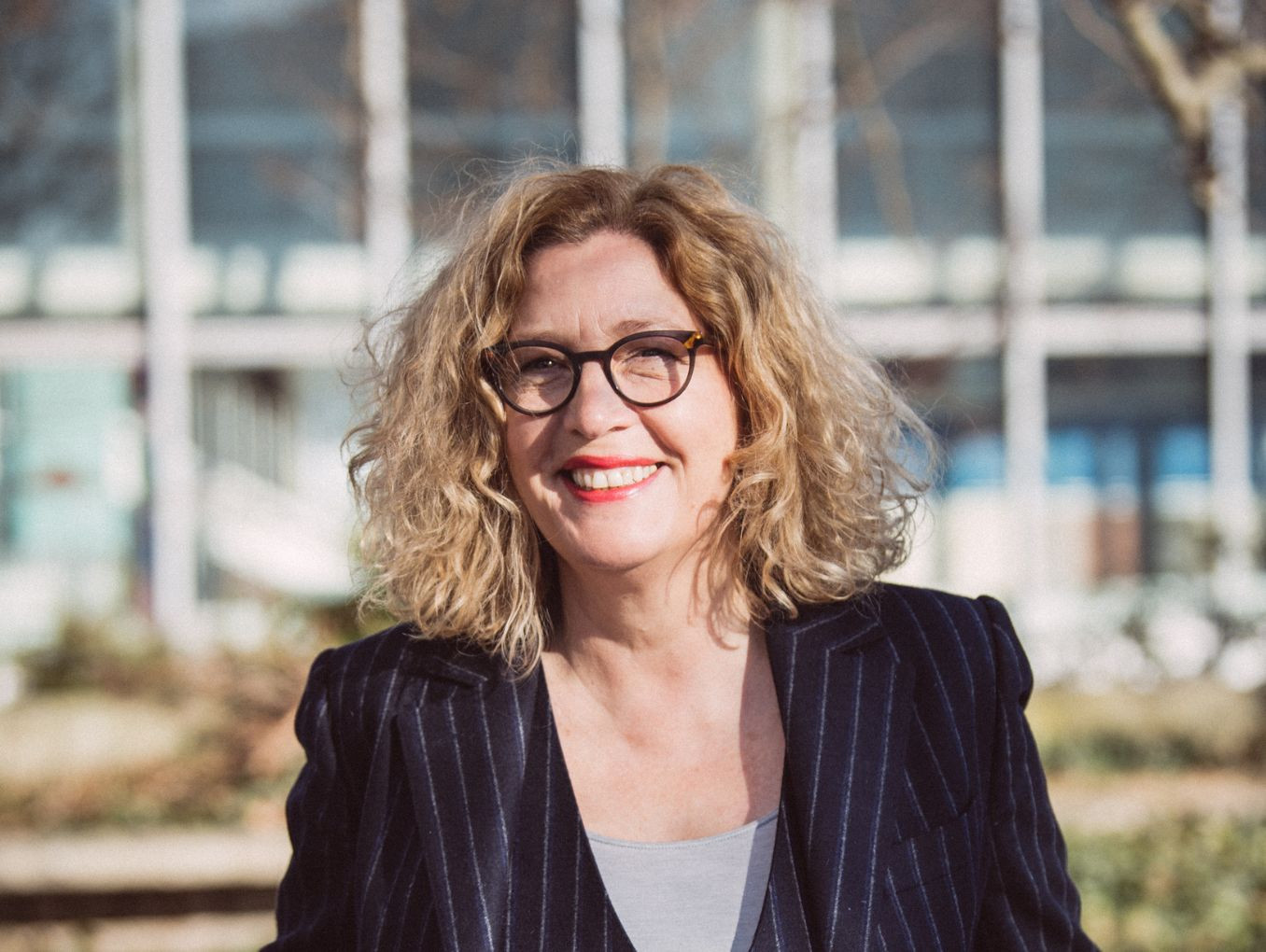
As part of the Berlin University Alliance Grand Challenge on “Social Cohesion”, Prof. Dr. Martina Löw studies these (re)negotiation processes. She leads the Collaborative Research Centre “Re-Figuration of Spaces” at the Technical University of Berlin (TUB), studying how we design and use spaces together, from our favourite spots in our neighbourhoods to conflicts shaping cities. A particular focus of her work is on how diversity influences social life and what role queer subcultures play. Together with us, she looks Beyond Now: What does Berlin need to ensure social cohesion endures in the future?
As part of the Berlin University Alliance Grand Challenge on “Social Cohesion”, Prof. Dr. Martina Löw studies these (re)negotiation processes. She leads the Collaborative Research Centre “Re-Figuration of Spaces” at the Technical University of Berlin (TUB), studying how we design and use spaces together, from our favourite spots in our neighbourhoods to conflicts shaping cities. A particular focus of her work is on how diversity influences social life and what role queer subcultures play. Together with us, she looks Beyond Now: What does Berlin need to ensure social cohesion endures in the future?
A CONVERSATION WITH MARTINA LÖW
The Berlin Science Week theme this year is Beyond Now: it’s about thinking beyond the present moment. When you look at current developments such as migration, digitalisation, or climate change, which do you think will most strongly shape how we live together in the future?
Martina Löw: Digitalisation. The world is fundamentally changing because of this social phenomenon. Almost all industries are restructuring. Today, banks handle 90% of customer contact digitally, around 80% of purchases happen online, and print media are becoming increasingly rare.
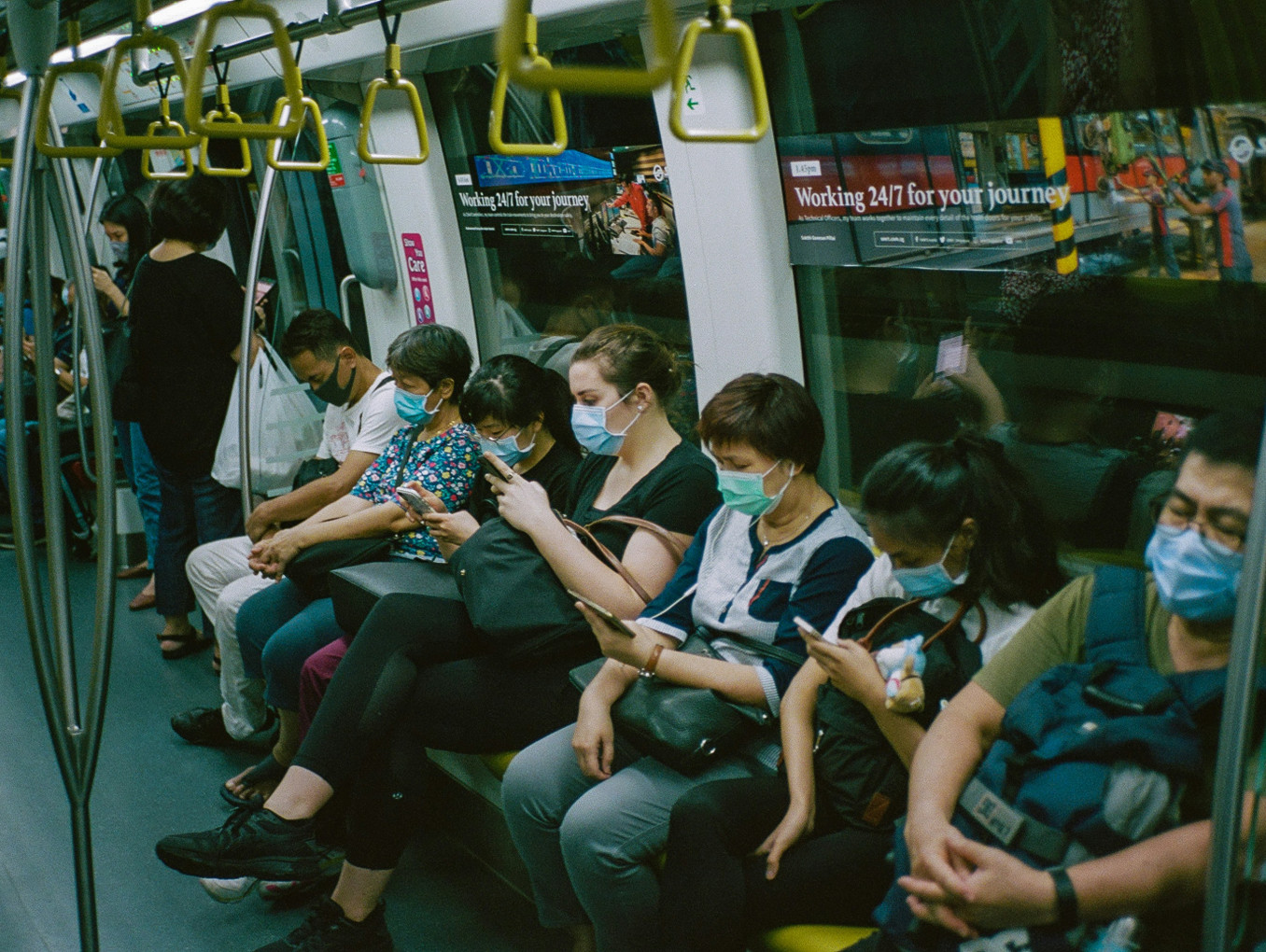
Despite all the differences in the details, what we share with people all over the world is the necessity of having to reorient ourselves. Our coexistence is becoming more relational and interdependent. We measure ourselves – and are measured – in rankings, ratings, or mappings. With smartphones in our pockets, driving smart cars, or living in digitised apartments, we are seeing a new form of everyday surveillance emerge.
Every conceivable action is being tracked, placed in relation to other actions, and ultimately marketed. State control through digitalisation is also increasing worldwide. For example, border regimes are changing in such a way that not only are more borders being fortified, but the border control sites are also becoming more heterogeneous and fluid.
Despite all the differences in the details, what we share with people all over the world is the necessity of having to reorient ourselves. Our coexistence is becoming more relational and interdependent. We measure ourselves – and are measured – in rankings, ratings, or mappings. With smartphones in our pockets, driving smart cars, or living in digitised apartments, we are seeing a new form of everyday surveillance emerge.
Every conceivable action is being tracked, placed in relation to other actions, and ultimately marketed. State control through digitalisation is also increasing worldwide. For example, border regimes are changing in such a way that not only are more borders being fortified, but the border control sites are also becoming more heterogeneous and fluid.
This includes checks at airports, digital surveillance on the open sea, mobile border controls, and the storage and sharing of data on migrating people. The only thing that gives me hope here is that the shared challenge, and the awareness of our interdependence, can offer new possibilities for social cohesion.
The Berlin University Alliance refers to these kinds of major societal transformation processes as “Grand Challenges”. Why is social cohesion a “Grand Challenge,” i.e., a crucial question for the future? What makes these major transformational themes that BUA focuses on more complex than other research questions?
Martina Löw: The recognition within BUA that social cohesion is a Grand Challenge for societies arose from a very concrete experience. In Berlin in 2015, we collectively experienced that neither the city nor society had the structures to adequately respond to the large number of arriving refugees. Science failed to reach the public with relevant research approaches or findings, even though the necessary expertise was certainly present across disciplines.
Through the Grand Challenges, we bring together the competences of various Berlin institutions and disciplines quickly and with minimal bureaucracy to respond adequately and more rapidly to major societal challenges. With the research focus “Social Cohesion,” we start from the premise that modern societies can no longer rely on shared values and norms. Instead, we must develop strategies that engage differences and, above all, bring them into dialogue. That’s what makes it so complicated. Social cohesion is a process that unfolds alongside the transformation of society – particularly through digitalisation and climate change.
You lead the collaborative research centre Re-Figuration of Spaces, which investigates how spaces are created, used, and sometimes contested. How can the concept of spaces help us understand the issue of social cohesion?
Martina Löw: Today, many people argue about issues without realising that these arguments are about underlying spatial concepts. One person fights for car traffic, another for pedestrian-friendly inner cities. Neither of them realises that this debate reflects a deeper tension between the concept of trajectorial space — infrastructures designed solely for transit, such as streets, canals, or flight paths — and the concept of place.
An even more fraught conflict is that of open migration routes versus closed state borders. Some see freedom and security in networked or trajectorial spaces, while others can only envision the future within clearly defined territorial spaces.
Our world is undergoing a transformation in its spatial configurations. Our sense of orientation is no longer based on maps but relies on navigation systems. Our economy is no longer national but globalised. Our diaries have become virtual pins on social media. If we're not talking about spaces, we won’t understand our conflicts. But if we do talk about spaces, we can approach conflicts differently. We shift the conversation away from the conflicts themselves toward the structures in which those conflicts arise.

An even more fraught conflict is that of open migration routes versus closed state borders. Some see freedom and security in networked or trajectorial spaces, while others can only envision the future within clearly defined territorial spaces.
Our world is undergoing a transformation in its spatial configurations. Our sense of orientation is no longer based on maps but relies on navigation systems. Our economy is no longer national but globalised. Our diaries have become virtual pins on social media. If we're not talking about spaces, we won’t understand our conflicts. But if we do talk about spaces, we can approach conflicts differently. We shift the conversation away from the conflicts themselves toward the structures in which those conflicts arise.
What challenges does a city like Berlin face in terms of social cohesion? Where do you see places that connect people, and where do tensions arise?
Martina Löw: Have you ever been to Ergün’s fish stall? It’s a remarkable spot, and there are many others like it in Berlin. It’s as if people have agreed to focus on what they have in common, rather than on their differences. The fish stall particularly highlights relationships between German-Turkish and German-German people (or German-x-unmarked people). There’s a kind of intrinsic logic of place at work here, hard to resist. Often, people share food or cigarettes with those at the table next to them, cheer together loudly when the German or Turkish national soccer team scores, or sing along to music playing on a screen.
Berlin faces endless challenges when it comes to social cohesion. Time and again, we reach points where we know: this, we cannot and will not accept. As much as we long for indifference, we encounter the limits of our composure. This makes places where people come together beyond politics, religion, and lifestyle all the more important. Even though Ergün’s fish stall is not particularly expensive, one must still be able to afford the food there. That’s why it should be a shared goal in cities like Berlin to also support these cherished spots that help sustain or build relationships.
You also research queer subcultures: Which spaces are particularly important for them? What makes Berlin attractive for subcultures?
Martina Löw: Large cities are attractive for subcultures. Anonymity provides protection. City dwellers tend toward a certain indifference because they are exposed to so many experiences of difference that they simply can’t get upset about everything. Georg Simmel actually described this for Berlin as early as the beginning of the 20th century. Heterogeneous spaces are particularly appealing to queer communities, offering greater opportunities for a calm and easy coexistence.
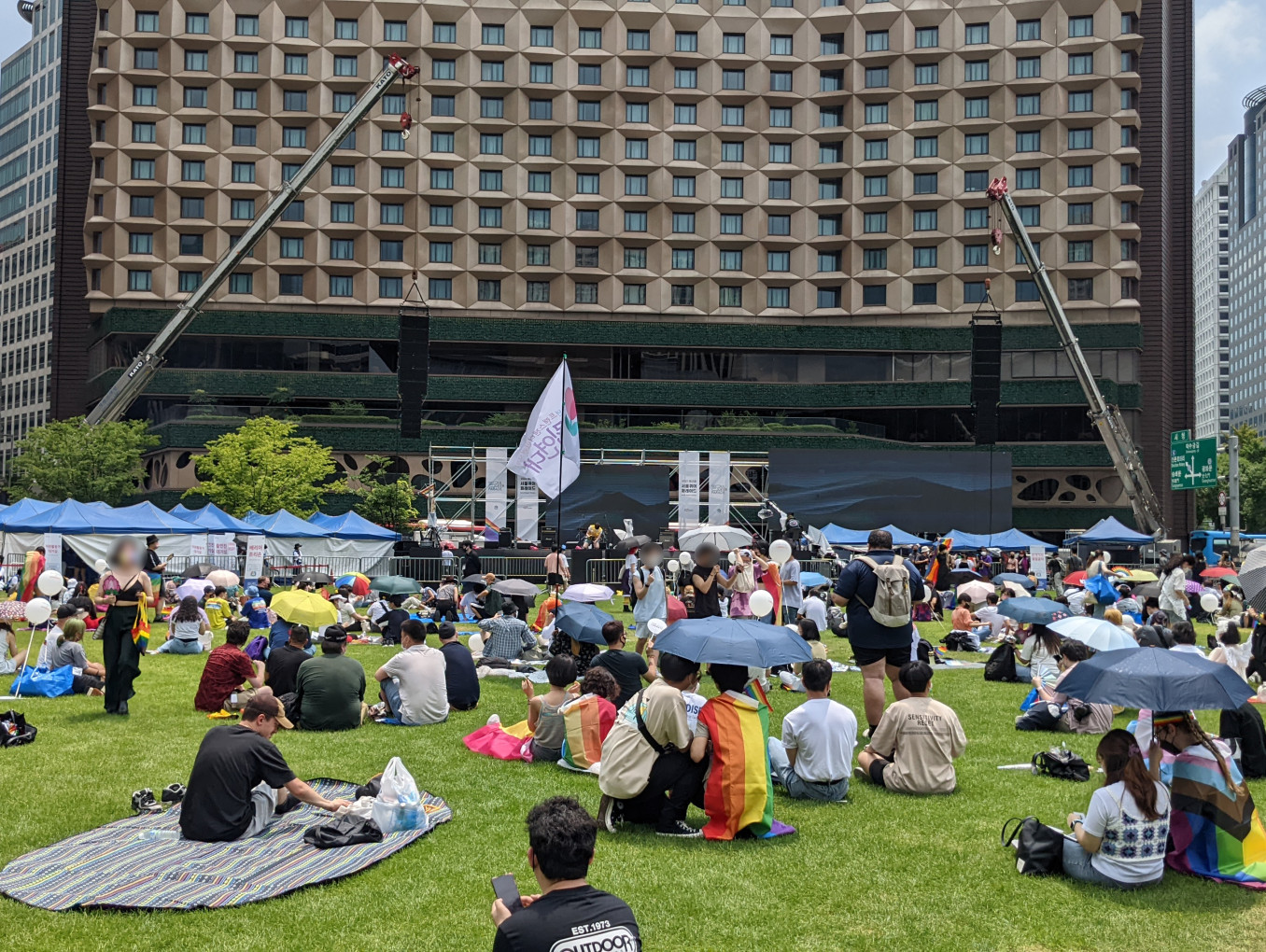
We conducted research on queer communities in Seoul, where some neighborhoods are predominantly home to lesbians, and others to gay men. People there seek spaces that provide a sense of togetherness. Berlin is not organised by sexual identity in the same way, but the city offers many meeting points and opportunities for people who reject heteronormativity and the gender binary. Like everyone else, queer communities also look for stimulation and inspiration: cinema, concerts, readings, lectures, theatre and opera, gardens, green spaces in general, cafés, etc. And Berlin has all of this as well.
We conducted research on queer communities in Seoul, where some neighborhoods are predominantly home to lesbians, and others to gay men. People there seek spaces that provide a sense of togetherness. Berlin is not organised by sexual identity in the same way, but the city offers many meeting points and opportunities for people who reject heteronormativity and the gender binary. Like everyone else, queer communities also look for stimulation and inspiration: cinema, concerts, readings, lectures, theatre and opera, gardens, green spaces in general, cafés, etc. And Berlin has all of this as well.
Finally, looking ahead: What gives you hope that social cohesion can also succeed in the future? And what should we do in our everyday lives to support it?
Martina Löw: I’m hopeful when I can think of something in a new way. I recently read the book All Under Heaven by Tingyang Zhao. I was surprised at how much strength reading it gave me. Not because the book is extraordinarily good, but because I was suddenly able to imagine the world differently.
When I think of the globe — which is always evoked when we talk about globalisation — I imagine it as the ball that used to sit on the teacher’s desk in geography class. Grooved, divided into continents. You look at it to find countries and differentiate between them. It emphasises difference rather than commonality. The planet, on the other hand, makes me think of environmental catastrophe: the end of habitability, terraforming.
All Under Heaven is a powerful image and also a space. Under heaven we are not hierarchised. We don’t live in the North or South, East or West, but together under infinite vastness. Zhao suggests that our primary concern should be mutual security. Just imagine if we had a global agreement where everyone must care for others’ safety, not their own. How extraordinary could social cohesion be then!
And when it comes to everyday life, we should read more. That helps.

BERLIN SCIENCE WEEK 2025 x BERLIN UNIVERSITY ALLIANCE
Tackling the Grand Challenges, together.
This interview is one of five in a special series created in partnership with the Berlin University Alliance (BUA). Together, we’re spotlighting how Berlin’s world-class research ecosystem is advancing transdisciplinary approaches and shaping the future. At Berlin Science Week 2025, you can meet BUA researchers, join discussions, and experience firsthand how Berlin is tackling the Grand Challenges of our time.
BERLIN SCIENCE WEEK 2025 x BERLIN UNIVERSITY ALLIANCE
Tackling the Grand Challenges, together.
This interview is one of five in a special series created in partnership with the Berlin University Alliance (BUA). Together, we’re spotlighting how Berlin’s world-class research ecosystem is advancing transdisciplinary approaches and shaping the future. At Berlin Science Week 2025, you can meet BUA researchers, join discussions, and experience firsthand how Berlin is tackling the Grand Challenges of our time.