Quantum Technologies
Quantum technologies are considered the key to the next digital transformation. They promise enormous advances—from powerful quantum computers to tap-proof communication. But these possibilities also raise new questions that go far beyond technology: Who will have access to these technologies? How do we ensure privacy and fairness? And what role does Europe play in the global quantum race?

Dr. Anna Pappa heads a junior research group at the Technical University of Berlin (TUB) on quantum communication and cryptography – topics that are part of the Berlin University Alliance's Grand Challenge Quantum Technologies. She develops new approaches for secure data transmission and works on translating these into practical applications. With us, she looks Beyond Now: What is already reality, where are we still in the early stages – and how can we shape the “quantum future” in a way that benefits us all?
Dr. Anna Pappa heads a junior research group at the Technical University of Berlin (TUB) on quantum communication and cryptography – topics that are part of the Berlin University Alliance's Grand Challenge Quantum Technologies. She develops new approaches for secure data transmission and works on translating these into practical applications. With us, she looks Beyond Now: What is already reality, where are we still in the early stages – and how can we shape the “quantum future” in a way that benefits us all?
A CONVERSATION WITH ANNA PAPPA
The Berlin Science Week 2025 theme is Beyond Now, it’s about thinking beyond the present moment. Quantum communication will play an important role in our future, even if it is still abstract for many of us today. Why will we all have to deal with it? And where are we already noticing the first changes in our everyday lives?
Anna Pappa: Quantum communication is expected to play an important role in the future because it addresses a key challenge of our digital age: secure information exchange. Today, almost every aspect of our lives — banking, healthcare, government services — depends on digital data. Until now, the security of communication has relied on certain mathematical problems that are considered hard to solve. However, future quantum computers could break these, making current systems vulnerable. Quantum communication, particularly quantum key distribution, provides security guaranteed by the laws of physics, rather than computational limits.
We are already seeing the first changes. Pilot projects are testing quantum communication links between cities, and satellites are being launched for quantum-secure data transfer. While the public may not yet notice it directly, critical infrastructures such as financial systems and healthcare are starting to adopt it. Over time, quantum-secure communication will become as natural and invisible as today’s internet encryption.
The Berlin University Alliance calls these kinds of major societal transformation processes “Grand Challenges”. Why are quantum technologies a “Grand Challenge”? What makes these major transformation topics more complex than other research questions?
Anna Pappa: Quantum technologies are considered a “Grand Challenge” because they push the boundaries of both theory and practice at the same time. Unlike incremental innovations, they demand breakthroughs in multiple fields — physics, computer science, material science, and engineering — all working together.
These transformation topics are highly complex because they require overcoming fundamental limitations. Apart from fundamentally reshaping the way we think about information processing, we must also address challenges that stem from the integration of quantum processes into real-world applications. At the same time, the potential impact is transformative. That’s why initiatives like the BUA focus on them: they represent both the highest scientific complexity and the greatest societal opportunity.
You're researching how anonymity can be achieved in quantum communication. Why is this so important, and what problems are you and your team currently facing?
Anna Pappa: Ensuring anonymity in online communication has emerged as a fundamental property, reflecting the need to protect not only the content of messages but also the identities of the communicating parties. For example, in democratic processes, whistleblowing, or sensitive negotiations, it is essential to guarantee that no one can trace who is communicating with whom. While quantum communication already offers strong security against eavesdropping, ensuring anonymity adds another layer of trust and usability.

It is however a very challenging task to devise quantum protocols that remain anonymous while still being efficient, secure and scalable. My team and I are working on developing practical approaches that balance these trade-offs, aiming to create networks that can offer both quantum-enabled security and true anonymity. Since many of these protocols rely on multipartite entanglement, we are actively collaborating with several experimental groups.
Developing scalable methods to generate and maintain high-quality entanglement while managing inevitable imperfections remains a major challenge. Overcoming these obstacles is crucial for realising quantum networks that offer not only unprecedented security but also anonymity as an intrinsic feature.
It is however a very challenging task to devise quantum protocols that remain anonymous while still being efficient, secure and scalable. My team and I are working on developing practical approaches that balance these trade-offs, aiming to create networks that can offer both quantum-enabled security and true anonymity. Since many of these protocols rely on multipartite entanglement, we are actively collaborating with several experimental groups.
Developing scalable methods to generate and maintain high-quality entanglement while managing inevitable imperfections remains a major challenge. Overcoming these obstacles is crucial for realising quantum networks that offer not only unprecedented security but also anonymity as an intrinsic feature.
Any technology can be misused. What specific dangers do you see in quantum cryptography, for example by authoritarian regimes or large corporations?
Anna Pappa: It’s true that any technology can be misused, and quantum cryptography is no exception. While it promises unprecedented security, it could also be exploited by authoritarian regimes or criminal organisations to protect their communications from legal interception, potentially enabling oppressive or illegal actions. Large corporations could gain an asymmetric advantage by securing sensitive information in ways unavailable to smaller competitors, intensifying power imbalances. There’s also a risk of overreliance—quantum cryptography protects the communication channel itself, but not the communicating end users.
Responsible innovation design is a topic that concerns Berlin-based researchers. What role does it play in relation to quantum technologies?
Anna Pappa: Quantum technologies have the potential to transform communication and computation, but they also carry risks—such as reinforcing power imbalances, enabling surveillance, or being misused by malicious actors. Responsible innovation is therefore central to the development of quantum technologies, and Berlin-based researchers actively consider both the societal and ethical implications of their work.
By embedding responsible innovation principles into research and development, scientists can anticipate potential harms, ensure transparency, and prioritise equitable access; such measures include open-access publications, freely accessible courses and training, open-sources libraries and software. Developing clear regulations and international standards also helps ensure quantum technologies are interoperable and ethically deployed. At the same time, it is important to involve diverse stakeholders in decision-making and prioritize sustainability in hardware and infrastructure design.
Berlin is considered a hotspot for quantum research. What does that mean for young researchers or start-ups here? And how does the Berlin Quantum Alliance help strengthen Europe's role in the competition for the “quantum future”?
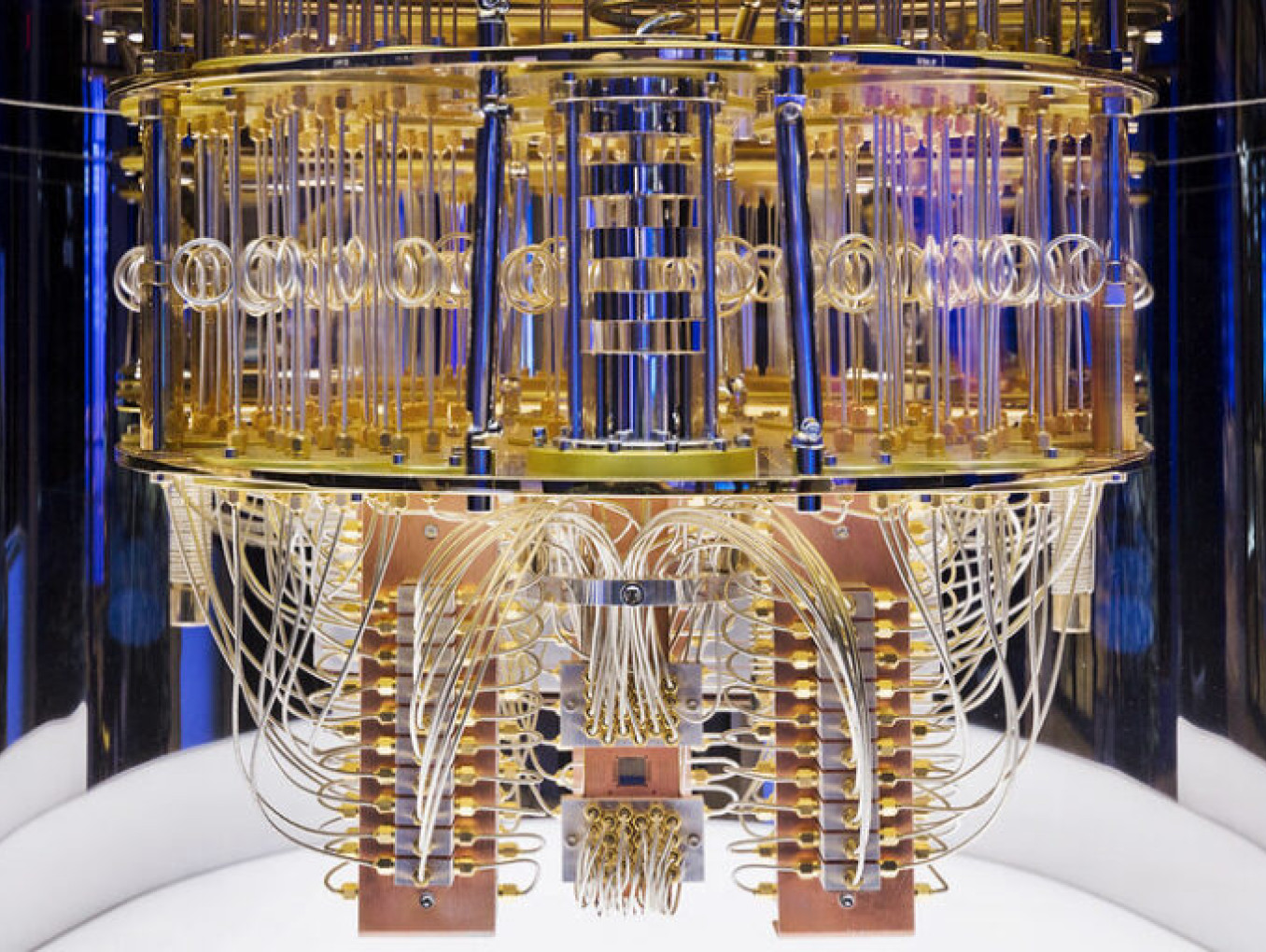
Anna Pappa: Berlin is indeed a hotspot for quantum research as it offers young researchers and start-ups unique opportunities to access cutting-edge laboratories, collaborate with leading scientists, and engage with a vibrant ecosystem of innovation. The unique concentration of research institutes (e.g., Fraunhofer, Helmholtz), companies (e.g., Deutsche Telekom, Q-CTRL) and academic institutions of the BUA, fosters knowledge exchange, mentorship, and rapid experimentation, that can accelerate both research careers and entrepreneurial ventures.
The Berlin Quantum Alliance plays a key role in this ecosystem by coordinating efforts across universities, research institutes and industry, promoting shared infrastructure, and facilitating partnerships. By fostering collaboration and pooling resources, the BQA enables Europe to stay competitive in the global quantum race, securing a leading position in this transformative field.
Anna Pappa: Berlin is indeed a hotspot for quantum research as it offers young researchers and start-ups unique opportunities to access cutting-edge laboratories, collaborate with leading scientists, and engage with a vibrant ecosystem of innovation. The unique concentration of research institutes (e.g., Fraunhofer, Helmholtz), companies (e.g., Deutsche Telekom, Q-CTRL) and academic institutions of the BUA, fosters knowledge exchange, mentorship, and rapid experimentation, that can accelerate both research careers and entrepreneurial ventures.
The Berlin Quantum Alliance plays a key role in this ecosystem by coordinating efforts across universities, research institutes and industry, promoting shared infrastructure, and facilitating partnerships. By fostering collaboration and pooling resources, the BQA enables Europe to stay competitive in the global quantum race, securing a leading position in this transformative field.
If we jump ahead to 2035, what applications of quantum technologies will we be using as a matter of course, and what makes you hopeful that these developments will be designed fairly?
Anna Pappa: Of course, it’s not easy to predict precisely what 2035 will look like, but we can anticipate that quantum technologies will become an integral part of computing, secure communication, and advanced simulation for materials, chemistry, and pharmaceuticals. We may also see quantum-enhanced optimisation in logistics, finance, and energy systems.
What makes me hopeful is that the community is increasingly embracing principles of responsible innovation: embedding ethics, transparency, stakeholder engagement, and equitable access into research and development from the start. By prioritising these values alongside technical excellence, we have the chance to ensure that these transformative technologies benefit society broadly and transparently.

BERLIN SCIENCE WEEK 2025 x BERLIN UNIVERSITY ALLIANCE
Tackling the Grand Challenges, together.
This interview is one of five in a special series created in partnership with the Berlin University Alliance (BUA). Together, we’re spotlighting how Berlin’s world-class research ecosystem is advancing transdisciplinary approaches and shaping the future. At Berlin Science Week 2025, you can meet BUA researchers, join discussions, and experience firsthand how Berlin is tackling the Grand Challenges of our time.
BERLIN SCIENCE WEEK 2025 x BERLIN UNIVERSITY ALLIANCE
Tackling the Grand Challenges, together.
This interview is one of five in a special series created in partnership with the Berlin University Alliance (BUA). Together, we’re spotlighting how Berlin’s world-class research ecosystem is advancing transdisciplinary approaches and shaping the future. At Berlin Science Week 2025, you can meet BUA researchers, join discussions, and experience firsthand how Berlin is tackling the Grand Challenges of our time.