10 Years of Berlin Science Week
In 2025, Berlin Science Week is celebrating its tenth anniversary: a decade of connecting science, society, and culture in one of Europe’s most dynamic cities. What began as a decentralised platform for public science has become a curated international festival exploring the role of knowledge in times of change. With this year’s theme “Beyond Now,” the festival is reflecting on a world shaped by turning points and what comes next.
To mark the moment, Christian Rauch, Festival Director of Berlin Science Week, answers ten questions that trace the past, present, and possible futures of the festival: from urgent challenges and shifting public mindsets to the power of art in science, interdisciplinary practices, and imagination.
A CONVERSATION WITH CHRISTIAN RAUCH
Berlin Science Week is turning ten. What were the defining ideas behind the festival when it started and how have they shifted over the years?
Christian Rauch: When Berlin Science Week was founded in 2016, the goal was to create an event platform to make Berlin’s scientific landscape internationally more visible. From the very beginning, the Berlin Senate has been a key supporter, highlighting Berlin’s importance as an international hotspot for science.
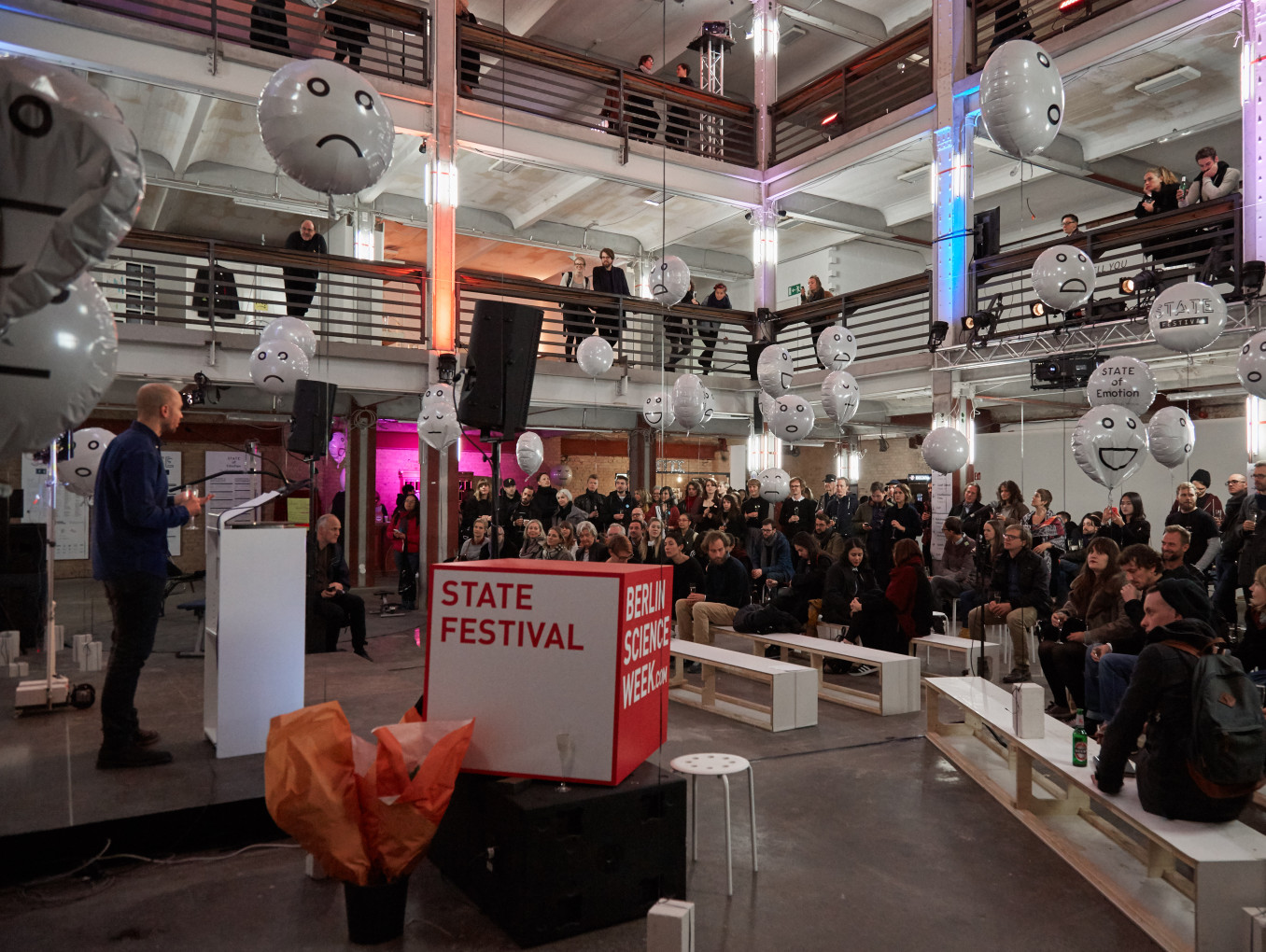
Held against the backdrop of the Falling Walls Conference, which has been organised annually since 2009 on the date of the fall of the wall, Berlin Science Week began with around 30 events organised by Berlin research institutions under one umbrella. More than half of the events were already freely accessible at the time. With for example STATE Festival, which was launched two years earlier on this date, Berlin Science Week already featured a lively science festival element for the city’s public in its founding year.
Now, 10 years on, Berlin Science Week has grown into one of the most dynamic international science event platforms, with over 300 events, more than 120 partner organisations and 35,000 visitors last year.
Held against the backdrop of the Falling Walls Conference, which has been organised annually since 2009 on the date of the fall of the wall, Berlin Science Week began with around 30 events organised by Berlin research institutions under one umbrella. More than half of the events were already freely accessible at the time. With for example STATE Festival, which was launched two years earlier on this date, Berlin Science Week already featured a lively science festival element for the city’s public in its founding year.
Now, 10 years on, Berlin Science Week has grown into one of the most dynamic international science event platforms, with over 300 events, more than 120 partner organisations and 35,000 visitors last year.
Milestones include the launch of the first Festival Hub, CAMPUS at the Museum für Naturkunde in 2019, and the addition of the FORUM Festival Hub at Holzmarkt25 in 2023, as well as the ever-growing network of fantastic partner intuitions. All this made Berlin Science Week what it is today - a lively festival, where science and society meet, connecting researchers, institutions, and the curious public to celebrate and explore the role of science in an ever-changing world.
The 2025 theme is “Beyond Now”. What does this phrase mean to you personally and how is it shaping this year’s edition of the festival?
Christian Rauch: For me, “Beyond Now” captures the moment we find ourselves in: a time after a turning point, when so much is no longer as we once knew it. In recent years, we’ve spoken so much about how the world might, or would have to, change. By now, we must realize: the world we knew it seems to have suddenly vanished. Replaced by something we cannot yet fully grasp. Familiar certainties have crumbled, orientation is hard to find, and many of us are caught between shock, uncertainty, and the search for stability.
With our festival we want to create a space where we can consciously acknowledge this moment without sugarcoating it. Especially because the news cycle can be overwhelming, we need places where we can pause together, ask questions, and think ahead. That’s why “Beyond Now” is also an invitation not to get stuck in crisis thinking, but to explore possibilities: How do we want to respond to this new reality? What ideas, insights, and forms of collaboration can help us actively shape what comes next?
The theme suggests that we are operating in a time after a turning point, a space defined by uncertainty and instability but also possibility. What role do you think science and research can play in navigating this space of transformation?
Christian Rauch: Science can’t provide ready-made solutions to the challenges of our time. But what it can do is offer guidance by providing solid foundations for us to understand our current situation. Science also opens up room to take action by revealing options that we can weigh together.
Science embodies an attitude that is particularly valuable in tense times. It thrives on questioning, testing, and re-evaluating supposedly certain truths. Scientific knowledge is never absolute: it is considered valid until new insights expand or refute it. This principle could also help us as a society: less absoluteness, more willingness to examine perspectives and to rethink.
There’s a growing sense of urgency across science, culture, and society. In your view, what is the most pressing challenge science faces today? And what tends to be overlooked?
Christian Rauch: One of the greatest challenges is the attacks on the freedom and integrity of science. We’re seeing how, in some countries, research is deliberately put under pressure, whether through political interference, funding cuts, or attempts to discredit inconvenient evidence. Also in Germany, we feel the impact of financial constraints that limit the scope for scientific progress.
At the same time, society expects science to majorly contribute to solving the the big challenges of our time: climate, health, digitalisation, and social cohesion to name a few. Yet science can only live up to this responsibility if it remains in close dialogue with the public. After all, scientific knowledge only unfolds its true impact when it is understood, discussed, and put to use.
What is often overlooked is the fragile foundation of trust. Fake news and so-called “perceived truths” spread quickly, while scientific evidence is usually more complex and often difficult for non-experts to grasp. That’s why we must do everything we can to safeguard trust in science. Because without it, research cannot truly contribute to solutions.
As democracies face pressure and disinformation spreads around the world, the integrity and freedom of science are also at risk. In that context, what responsibility does a festival like Berlin Science Week have?
Christian Rauch: Our responsibility, as I see it, is to make science accessible – to everyone, not just to specialists. Experiencing science, its questions, methods, and enthusiasm, changes people’s relationship to it.
That’s why Berlin Science Week aims to create spaces where dialogue at eye level is possible. It’s not just about conveying knowledge, but also about listening: What questions are on the public’s mind? What perspectives do art, culture, business, and politics add? This exchange feeds back into science and makes it more vibrant.
Of course, we can’t solve all problems. But we can create transparency, make science more approachable, and thereby strengthen trust in it. In a time when fake news and disinformation are growing louder, that is a crucial contribution.
Christian Rauch: Our responsibility, as I see it, is to make science accessible – to everyone, not just to specialists. Experiencing science, its questions, methods, and enthusiasm, changes people’s relationship to it.
That’s why Berlin Science Week aims to create spaces where dialogue at eye level is possible. It’s not just about conveying knowledge, but also about listening: What questions are on the public’s mind? What perspectives do art, culture, business, and politics add? This exchange feeds back into science and makes it more vibrant.
Of course, we can’t solve all problems. But we can create transparency, make science more approachable, and thereby strengthen trust in it. In a time when fake news and disinformation are growing louder, that is a crucial contribution.
Many people come to Berlin Science Week out of pure curiosity, not as scientists or experts. What kind of space are you trying to create for those who don’t see themselves as part of “science” but want to engage with it?
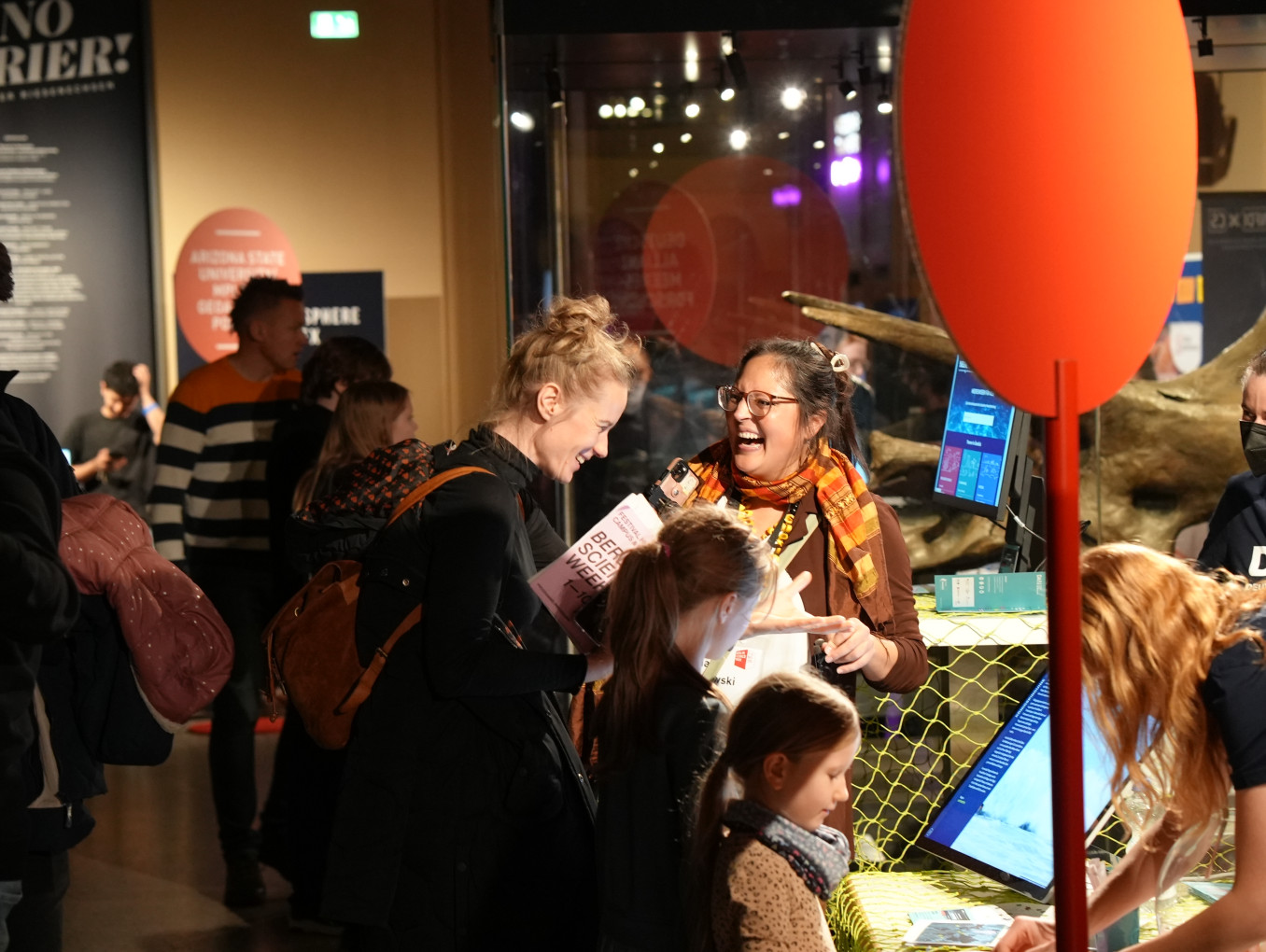
Christian Rauch: To participate in research itself often requires years of training. But to engage with science, only one thing is necessary: curiosity. We all ask questions about life, the world and our place in it. Science offers fascinating insights, from the origins of the universe to the smallest cells, from economic systems to social dynamics.
Berlin Science Week is a space where everyone can engage with science. It’s not about being an expert but about asking questions together and exploring new perspectives. My hope is that visitors leave the festival feeling inspired to question, to see the familiar in a new light, and to want to think further. Science shouldn’t happen in an ivory tower. It belongs to all of us.
“Beyond Now” is also an invitation to think across boundaries. How do you foster meaningful exchange between people who don’t usually meet?
Christian Rauch: Our goal is to create spaces that are accessible not just for experts, but for a broad public. At our events, we offer different perspectives on topics, bringing together not only various scientific disciplines but also voices from art, culture, politics, and business. Only together can we truly grasp the complex questions of our time.

All of this is less about transmitting finished knowledge and more about questioning together. That’s why we lay a strong emphasis on dialogue-oriented formats, discussions, and participatory elements. Traditional lectures have their place, but what matters most is bringing people together to discuss and exchange at eye level.
Since last year, we’ve also been testing a digital platform that allows all visitors to contribute their own perspectives and engage in conversations. It helps create new connections that extend beyond the festival itself.
All of this is less about transmitting finished knowledge and more about questioning together. That’s why we lay a strong emphasis on dialogue-oriented formats, discussions, and participatory elements. Traditional lectures have their place, but what matters most is bringing people together to discuss and exchange at eye level.
Since last year, we’ve also been testing a digital platform that allows all visitors to contribute their own perspectives and engage in conversations. It helps create new connections that extend beyond the festival itself.
Berlin is a city of experimentation, contradiction, and reinvention. How has the city shaped the identity of Berlin Science Week?
Christian Rauch: Berlin Science Week is a mirror of this city — with all its energy, openness, and restlessness. A festival is the ideal place to try out new things. It thrives on the moment, the spontaneity of encounters, and the willingness to engage with the unknown.
This also shapes our work with our partners. We invite them to develop unusual and creative formats for science communication and to bring science to places that you wouldn’t necessarily associated with it: clubs, theatres, bars, or galleries. This mix fits Berlin and makes Berlin Science Week an experimental space where science feels alive rather than distant, and where it becomes part of everyday life.
Art and science have always been part of conversations at Berlin Science Week, but this year they are more integrated than ever. Why is that so important right now, in a moment shaped by uncertainty, emotion, and complexity?
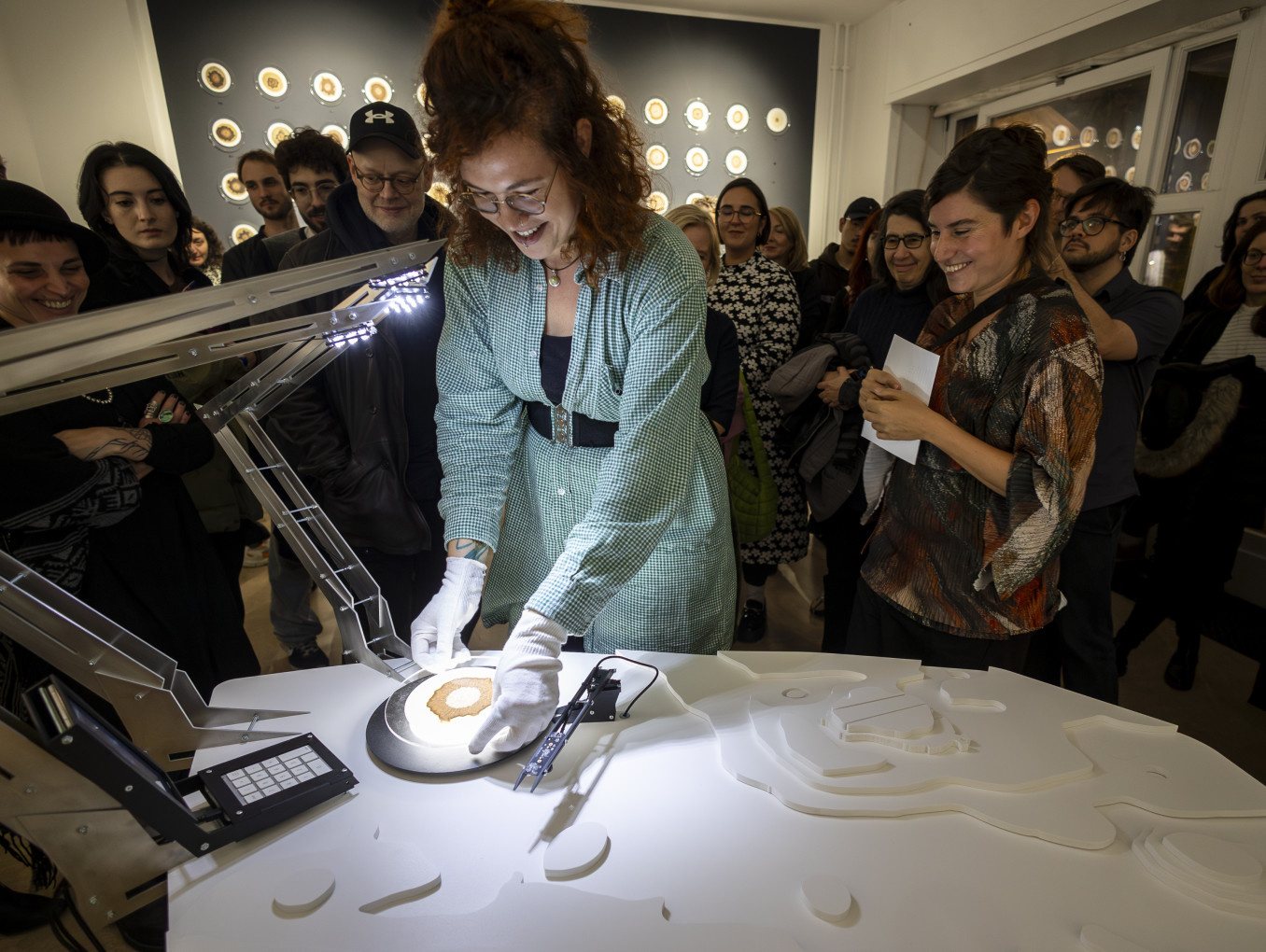
Christian Rauch: Special and often surprising insights emerge at the intersection of disciplines. When art and science come together, a creative tension arises that opens up new possibilities. It unlocks pathways for experimentation, discovery, and communication that purely academic approaches can’t reach.
More and more research institutions are deliberately working with artistic formats. In recent years, Berlin has developed a very dynamic scene that is making the city an international hub for Art-Science. With Berlin Science Week, we want to give this field a strong platform and make it even more visible.
Looking ahead: what would you like Berlin Science Week to stand for in ten more years?
Christian Rauch: I hope that over the next ten years, Berlin Science Week continues on its path of growing as a fertile ground for experimentation in how science and society can engage with each other. A global platform that celebrates the importance of science in society. A place that brings people together across borders and disciplines: diverse, interdisciplinary, lively, and open.
Public participation should remain at the core. I want Berlin Science Week to create even more opportunities for people to actively engage with and form part in the major conversations around how science impacts our future. Our goal is to unite even more partners inside and outside Berlin around this mission. This includes strengthening ties with European partners, so that shared challenges can be addressed across borders.